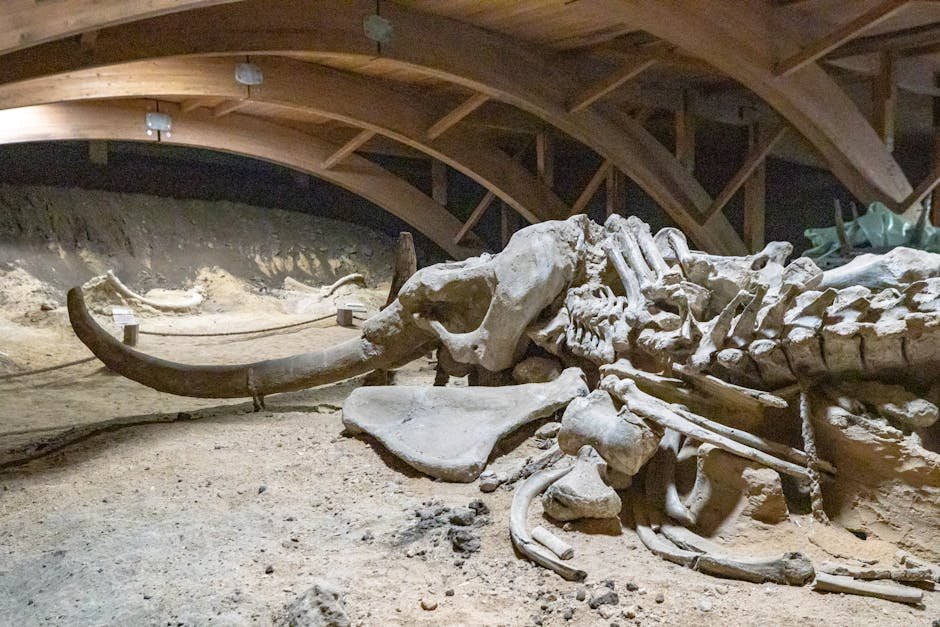
Bringing Back Mammoths: It’s Not Sci-Fi Anymore. And the CIA’s Involved
Think bringing back an extinct animal is just some sci-fi movie? Nah. Think again, pal. Scientists are actually trying to bring back woolly mammoths. And it’s not some far-off, hypothetical future. Nope. We’re talking a target as early as 2027. De-extinction of mammoths isn’t just fancy lab talk. It’s a hella real effort. Driven by companies like Colossal. Aimed at getting these ancient giants stomping on the Siberian plains once more. This isn’t your daddy’s Jurassic Park, that’s for sure.
Woolly Mammoths, Colossal, and 2027. It’s Happening
Yep. 2027. That’s the crazy timeline Colossal is pushing. They started just for this. Hitting the ground running with huge investments. Already announced scooping up $150 million. Boosting their total funding to nearly a quarter-billion dollars! A ton of dough.
Their grand plan? To genetically make and then ship these “rewilded” animals back to the Siberian plains. Tens of thousands of years after their ancestors disappeared. Wild, right? Heavy hitters are involved, too. Like genomics legend George Church, a co-founder. And another thing: It’s not just mammoths they want. Creatures like the Tasmanian tiger. The dodo bird. Also on the comeback list.
Genetic Magic! CRISPR/Cas9 Makes It Real
Remember those movies? DNA from some old mosquito in amber, mixed with frog genes, suddenly dinosaurs? Goofy. Very goofy. But guess what? ’90s sci-fi? It’s basically science reality now. All thanks to CRISPR/Cas9. Think “genetic magic scissors.” Cuts and pastes DNA super precisely.
But we can’t bring back dinosaurs. No way. DNA just doesn’t last that long. It decays fast. The half-life of DNA? About 521 years. So after millions of years, nothing there. Zero. But mammoths? Different story. They only died out 5,000 to 10,000 years ago. Lots of well-preserved remains. Lucky us.
The big secret? A close living relative. For mammoths, that’s the Asian elephant. Their genetics? 99% identical! Scientists are basically reading the “genetic books” of both. Spotting the differences. Then using CRISPR to “copy-paste” mammoth stuff into elephant DNA. Crazy. Harvard researchers, for instance, altered just three genes in elephant blood cells. Made them more cold-resistant. And get this: A lab-created mammoth cell is already here. All because of changes to 14 different genes. Next step? Getting an Asian elephant to carry a mammoth hybrid. To term. Think about that: a 22-month elephant pregnancy. Long wait. That’s a whole new vibe.
Not Just Mammoths! Tigers and Dodos, Too
Mammoths grab all the glory. But they’re not the only ones. There’s the Tasmanian tiger. The last one we knew, Benjamin, died in 1936. Just 18 months after someone filmed it. Gone from the wild 90 years ago. A messed-up symbol of extinction, for sure.
And then the dodo bird. Mysterious! A meter-tall, flightless thing from Mauritius. Sailors wiped ’em out, starting in 1598. Eggs destroyed by new animals. The last dodo? Seen 350 years ago. Not just sad tales, these. Blueprints, really, for de-extinction. Their genomes are all mapped: mammoths in 2015, dodos in 2016, Tasmanian tigers in 2018. Prime targets, all of them.
Siberia’s Pleistocene Park: Saving the Planet with Big Beasts
De-extinction isn’t just wowing us with old animals. It could actually fix messed-up ecosystems. Look at Pleistocene Park in Yakutia. A 20-square-kilometer thing. Started by a father-son science team. Playfully named it after a dinosaur movie, yeah, but their goal? Serious. Bring back once-super-fertile lands.
These guys think ice age animals are the only solution. The park already has horses, deer, camels, oxen, plus American bison. Brought ’em from all over the “Mammoth steppe” belt. That used to spread across Eurasia and North America. Grazing animals, they’re working. Trample snow. More sun for soil. Their waste? Really good for the earth. Now, think about huge woolly mammoths. Natural “snow machines.” Landscape engineers. Wild.
Hold Up. Is This Even Right? The Ethics Are Sketchy
Okay, this is crunchy. We can talk about how. But the real stickler: Should we even do it? What if bringing back mammoths totally messes up today’s fragile ecosystems? What if? And is it right to mess with the genes of animals we barely get?
Beth Shapiro, a biologist who wrote “How to Clone a Mammoth,” she’s raising flags. Says there could be unintended consequences. What we’d get? Not a pure mammoth. An “elephant hybrid.” Just a stand-in. A 2016 report on de-extinction ethics. It weighs pros and cons. Wants responsible action. The big hope is maybe the science helps us save current species. Their homes. The world. In this current mass extinction thing. But for Beth Shapiro, the big question? Still open. “I don’t know,” she admitted. That’s real talk you don’t hear often.
Millions of Dollars. And the CIA? Yep
Bringing back a mammoth? Pricey. Super pricey. George Church, that genomics legend, he’s also an entrepreneur. Co-founder of Colossal. Because, come on, this takes serious cash. No clear commercial payday either, right? Nobody’s buying mammoth steaks. So yeah, this needs “crazy rich” investors.
Colossal scored nearly a quarter-billion dollars. From 34 investors. But wait. One name on that list. In-Q-Tel. An investment firm from Arlington, Virginia. Check their site: “Frontier Science.” Some might say, “Science Fringe.” But if you dig deeper into their “about” section… Bam. The government agency behind In-Q-Tel: The CIA. You heard that right. The Central Intelligence Agency is putting money into de-extinction stuff. Suddenly, this whole project feels way more spy-thriller. Forget the dinosaur parks.
Forget Jurassic Park. Real De-Extinction Is Different
Movie magic? Shove it aside. “Jurassic Park” got it wrong. Big time. Pulling dinosaur DNA from old mosquitoes? Nope. DNA breaks down. Fast. Over zillions of years. Dinosaurs vanished 65 million years ago. Their bones? Stone. Not cells. No DNA there. Doesn’t matter how pretty that amber is.
Real de-extinction? It’s about recent extinctions. Like mammoths, from the Pleistocene epoch (5,000 to 10,000 years ago). Where actual DNA still exists. And you need a close living relative. To be the surrogate. To provide the genetic map. So yeah, movies? Dinosaurs everywhere. Reality? A careful, ethical high-wire act. It’s about fixing ecosystems, understanding life deep down. Way deeper than just building some theme park.
Quick Q&A (Because You’ve Got Questions)
Q: When are these mammoths supposed to show up?
A: Colossal, the de-extinction folks, are shooting for 2027. Soon.
Q: So, dinosaurs? Can we bring them back?
A: Nope. Not even with our fanciest tech. Dinosaur DNA? Long gone. Doesn’t last. Millions of years. Current de-extinction works only for recently-gone animals, with living relatives still around.
Q: Any red flags about trying to bring back stuff?
A: Oh, yeah. Big debates. Unknown impacts on nature. Is it even okay to mess with genes like this? And are we ignoring other animals that are dying now? The big question swung from “Can we?” to “Should we?” Simple.