The Deadly Threat of Counterfeit Car Parts: How Fake Components Destroy Your Engine
Ever been cruising down the 5, maybe doing 80 on a good day? Then suddenly, BAM! Chaos erupts under your hood. Red light flashes. A terrifying grinding sound screams. Just like that, your ride—hundreds of thousands of dollars worth of precision engineering—turns into a hella expensive pile of steel junk. Tow truck’s called. Your mechanic’s scratching their head. Where’d it all go wrong? Bad gas? Hard driving? Or was the real culprit counterfeit car parts?
We’re not talking about bad luck today. We’re talking about the silent terror lurking. Hiding behind shiny, perfect packaging, security codes that even scan on your smartphone, and the quiet destruction of engines across our state and beyond. This isn’t just a rip-off. It’s mechanical murder.
Counterfeit auto stuff? Inferior materials lead to catastrophic engine failure
Imagine this: a shiny, new part. Box looks totally legit. Hologram and everything. You or your trusted mechanic installs it, thinking everything’s chill. But inside? It’s a tragedy. These fakes might fool the eye, but their inside build quality is zero.
True original items are built with specific materials and tolerances. They’re designed to withstand incredible heat, pressure. Also, tough chemical solvents. Counterfeits? They take every shortcut imaginable. Using cheap substitutes that just can’t handle the job. This isn’t even about poor performance. It’s about impending, total engine meltdown. Seriously.
Fake oil filters use low-grade paper, blocking oil flow and often lacking a bypass valve. Instant engine seizure
The humble oil filter. Looks like a simple tin can, right? For a regular driver, it’s just there to catch dirty bits. But in a modern engine, it’s the hydraulic brain. Genuine filters contain special resin-impregnated microfiber papers designed for high pressure and chemical attack.
Counterfeit versions? Full of ordinary cellulose. Basically cardboard. That turns to pulp when it meets hot oil. Engine heats up. Oil pressure climbs to 4-5 bar. That cheap paper just gives way. It tears. Collapses. What we call “leaf collapse.” Sending pulpy debris directly into your engine’s delicate oil channels, clogging everything up.
But here’s the killer blow: real oil filters have a bypass valve. This spring-loaded mechanism lets dirty oil through if the main filter gets blocked, like during cold start-ups when oil is thick. Why? Because dirty oil is a thousand times better than no oil at all. Fake filters either skip this critical valve entirely. Or install one with a spring so weak it never opens. So, when that cheap paper clogs your filter, oil pressure drops to zero. Metal grinds. Bearings seize. All within seconds. That 200-lira fake filter just cut your engine’s main artery.
Counterfeit spark plugs use cheap ceramics. They overheat, shatter, and wreck your engine cylinders
And another thing: the heart of your engine’s ignition system. The spark plug. An authentic spark plug’s white body is made from alumina porcelain. Super tough material. Baked to be tougher than steel, incredibly resistant to heat. These plugs transfer explosive combustion heat away from the tip. It’s an art. Staying cool right in the center of the fire.
The fakes? They use cheap ceramic powders. They can’t transfer heat. They trap it. When you hit the freeway and your engine revs up, that cheap ceramic plug just can’t cool itself. It turns incandescent. Practically a glow plug. Igniting fuel before the piston can even complete its compression stroke. Hello, pre-ignition! Hello, “knocking.”
Now you’ve got uncontrolled explosions. The weak ceramic can’t handle the thermal shock and vibration. It cracks. It shatters. Steel-hard ceramic shards fall right onto the piston. At 4,000 RPM, those heavy pistons slam into those ceramic bits, pressing them against the steel valves. Cylinders get scored. Valve seats get wrecked. Engine loses compression. Misfires. Dies a slow, painful death.
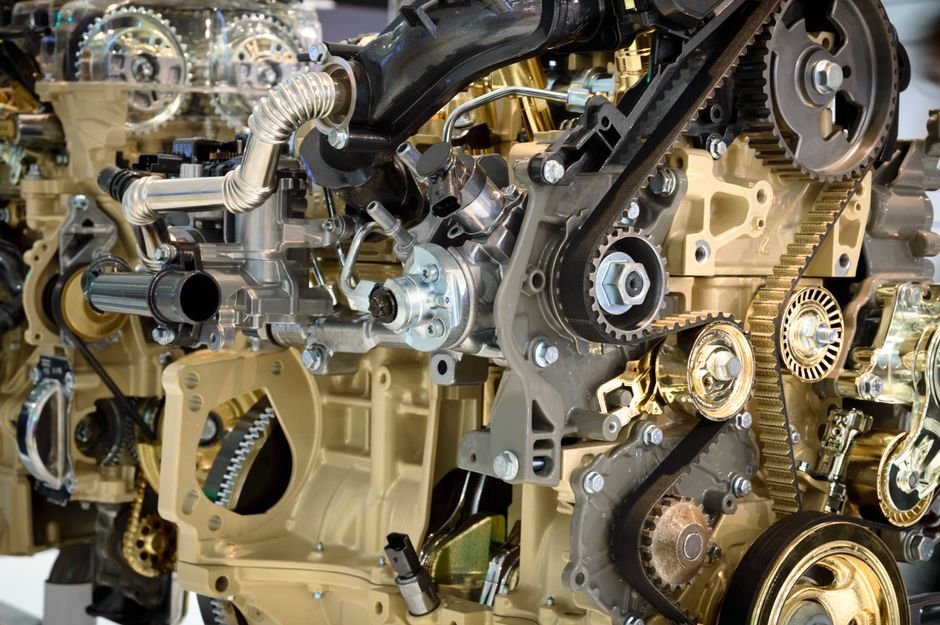
Imitation timing belts: cheap polyester means stretch, breakage, and piston-valve collision. Goodbye cylinder head
This one is brutal. Most modern car engines are “interference” designs. This means if the pistons reach their top point while a valve is open, they will collide. Your timing belt prevents this. Under immense tension and heat. It keeps everything synchronized.
A common myth is that timing belts are just rubber. Nope. Rubber is mostly just the outer coating. The real strength comes from inside. From tough, non-stretching, heat-resistant Kevlar or fiberglass cords.
Fake timing belts look identical on the outside—same texture, same lettering. But to cut costs, they swap out those crucial Kevlar cords for cheap polyester. Polyester stretches. A lot. Especially under engine heat and the intense pressure from tensioner pulleys. Soon, the cheap rubber teeth might strip. Or the polyester core just breaks. Valves stay open. Pistons moving at breakneck speed smash into those valves. Like a sledgehammer. Valves bend. Camshafts jump out of place. Your cylinder head is instantly scrap metal. Your car ceases to be a car and simply becomes a very depressing yard ornament.
Super fancy packaging, fake holograms and QR codes? Even mechanics struggle to tell it’s a fake
So who’s really to blame for these mechanical murders? It’s not always the honest mechanic sweating in their shop. Oftentimes, they’re victims too. They call their supplier for an original filter or spark plug. Trust the barcode on the box. Trust the invoice. They install the part. Months later, engine breaks. Who does the customer blame? The mechanic. Their reputation takes a hit, while the massive importers and shady wholesalers pushing these fakes keep making bank. Hiding in the shadows.
The copying technology is so good. It can perfectly replicate the box, the holograms, even QR codes that scan flawlessly. But that flawless packaging often contains zero engineering. It’s pure illusion.
Cheap upfront cost? Counterfeit parts are the most expensive thing you’ll ever buy for your car. Irreparable damage ahead
Think you’re saving a few bucks? Think again. A “bargain” price on an original part is almost always a huge red flag. The physical and commercial realities of production and distribution mean genuine items have a certain minimum price. Anything significantly below that? Likely too good to be true.
That 200-lira fake oil filter? It can easily lead to an engine rebuild costing thousands. The damage from a fake timing belt can turn your entire engine into an irreparable brick. What seemed like a cheap shortcut is, in reality, the most expensive purchase you will ever make for your car. Seriously.
To protect your ride, always be suspicious of low prices. Buy parts only from authorized dealers or official, direct suppliers
So, how do you defend against this relentless terror? One way: be skeptical.
- Holograms? Don’t trust ’em.
- Box quality? Means nothing.
- Scannable barcodes? Also can be faked.
The only real safeguard you’ve got is where you buy your parts. Always buy parts from authorized dealerships or official, direct-distributor-guaranteed suppliers for your vehicle’s brand. This cuts out the middlemen and the chance for fakes to slip in.
Question every part under your hood. Don’t fall for the illusion of a fancy box. May your ride stay true. And your mechanics honest.
Frequently Asked Questions
Q: How can I tell a fake oil filter from a genuine one?
A: A genuine oil filter is noticeably heavier. Because of its thick steel spring and quality filtering parts. Also, check the welds on the internal perforated metal sheet. Genuine filters have perfect, clean welds. Fakes often show burrs and inconsistent holes.
Q: What are the signs of a counterfeit spark plug?
A: Try scratching the porcelain markings on the spark plug with your fingernail. If they easily rub off, it’s likely fake. Genuine laser-etched markings won’t. And another thing: the crush washer at the base of a genuine spark plug will be firmly fixed. It won’t twist or come off by hand, unlike many fakes.
Q: Why are counterfeit timing belts so dangerous, even if they look identical?
A: While a fake timing belt may look the same externally, its internal structure uses cheap polyester instead of strong, non-stretching Kevlar or fiberglass cords. The legit ones. Under the immense heat and tension of a running engine, this cheap polyester stretches or breaks. Causing valve-piston collision. And catastrophic engine destruction.