Ramses II: The Pharaoh Who Built an Empire and Mastered Propaganda
Who actually ruled, not just for a minute, but for ages? When you think ancient Egypt, one name always pops up. A figure of myth and mighty power: Ramses II Pharaoh. This dude wasn’t just a king. Nope. He was a total force of nature, completely rewriting what it meant to run one of Earth’s biggest empires. Simply incredible, actually.
Ramses II’s Epic Reign
Picture ruling for a wild 66 years. Born around 1303 BCE, this pharaoh grabbed the throne in 1279 BCE. A super young leader stepping into a world that was peak Bronze Age stuff. Big, organized states were everywhere in the Eastern Mediterranean. Mycenaeans in Greece. The powerful Hittite Empire in what’s now Turkey. His grandfather, Paramessu, basically became Pharaoh Ramses I, setting up the 19th Dynasty. And Ramses II’s dad, Seti I, followed right after.
Young Ramses got some solid war experience on campaigns with his father in the Levant. He inherited a kingdom already steady after Akhenaten’s weird religious mess. Already primed for his ambition, totally ready for him to make his move. His reign would become one of Egypt’s longest. A pivotal chapter in the New Kingdom. And another thing: He lived to be around 90. Super old for the time, even though he was dealing with stuff like arthritis and serious dental problems when he was older.
Military Muscle & Kadesh
Ramses II was no stranger to a punch-up. His big goal? To make Egypt boss again in Canaan and the Levant. So, that meant clashing with the Hittites. The famed Battle of Kadesh in 1274 BCE, fought along the Orontes River in western Syria, was epic. Egyptian forces? Upward of 40,000 soldiers with 2,000 chariots. They went up against a similarly massive Hittite army.
Ramses found himself ambushed, much of his army scattered. But his leadership? Key. He rallied his men, then launched a counter-attack that broke the Hittite chariot assault. Now, Ramses made a big deal about it being a decisive victory. But modern experts kinda call it a strategic stalemate. A strategic stalemate, really. Still, this monumental conflict eventually led to the world’s first recorded peace treaty. That’s the “Eternal Treaty” or “Silver Treaty” with the Hittites, around 1259 BCE. This agreement made things chill, with Hittites influencing Syria while Egypt largely kept Canaan and southern lands.
Freed from intense northern conflicts, Ramses eyed the south. He pushed into Nubia, expanding Egyptian control way deeper than anyone before. All the way into modern Sudan. And he even pushed west into ancient Libya. By mid-reign, Ramses had made the Egyptian Kingdom huge. It was its greatest extent since Thutmose III, like two centuries earlier. He made New Kingdom Egypt the most powerful state in the known world. A hella comeback after a century of instability. Massive stuff.
Monumental Builder
Ramses II’s second half of his reign? It completely shifted from war to a massive building party. He left an indelible mark on Egypt and Nubia’s landscape. The Ramesseum, his huge mortuary temple at Thebes (modern Luxor), took two decades. It had big pylons, courtyards, and a truly colossal statue of Ramses himself. And another thing: He also had work done at Saqqara, near the Great Pyramids. An old place, lots built already.
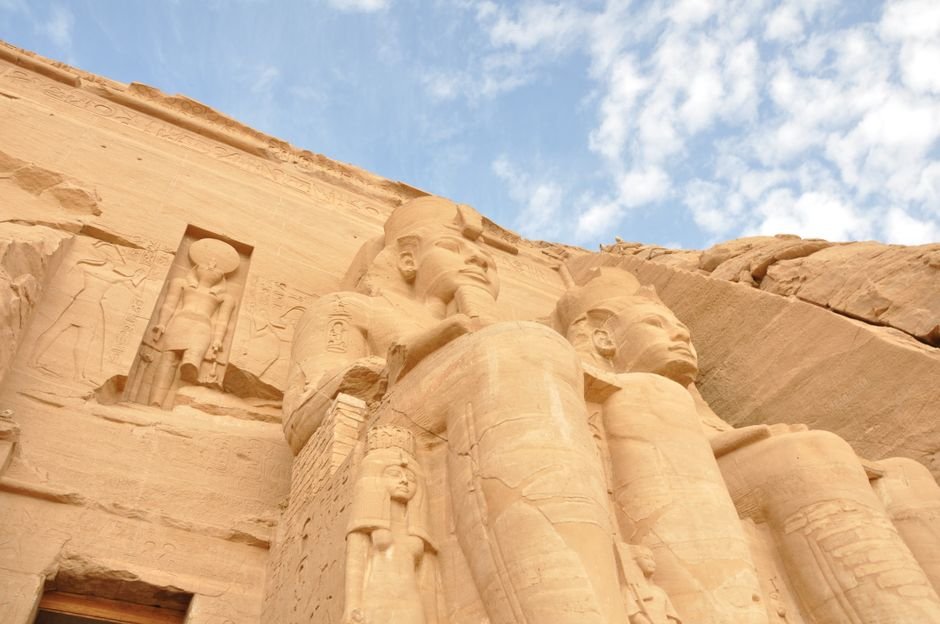
But the real showstopper? An absolute vibe! His work far south in Nubia. These fancy structures, like the temple at Beit el-Wali and the iconic rock-cut temples of Abu Simbel, weren’t just about devotion. Nope. They were declarations of Egyptian might to the southern territories. Abu Simbel, completed around 1244 BCE after 20 years, had two huge temples carved right into the rock. The bigger temple features four massive statues of Ramses. Each towering 20 meters tall. Wearing that double crown of Upper and Lower Egypt. A clear message. To anyone south of the Nile: the pharaoh runs this.
Propagandist Extraordinaire
Ramses II was maybe history’s first great propagandist. His monuments weren’t just buildings, you know? They were ads for his power and divine favor. Because every victory, every single part of his rule, was carved in rock. To be remembered for millennia. Stelae in the Nile Delta and Levant shouted about his triumphs over the Hittites and even Sea Peoples pirates.
The Kadesh Inscription, or “Pen-ta-ur’s Poem” — a written account of the battle — was everywhere on temples nationwide. While some academics argue about how much of a win Kadesh really was, Ramses made sure his version was set in stone forever. His building plans, Abu Simbel especially, were huge bragging exercises. From the detailed reliefs of his military campaigns to the sheer immovable scale of his statues, these structures were designed to show off an invincible god-king. He wrote his own story with the strength of granite.
Family and Succession Fun
Ramses II was a family man. Seriously. He’s estimated to have had around 100 children. Roughly an even split of sons and daughters. He had lots of wives, with Nefertari being his most famous Royal Wife. Honored in many temples he dedicated to her. And he even did the royal incest thing, a normal tradition in ancient Egypt. Marrying some of his own daughters. Stuff like Bintanath.
His incredibly long reign, while proof he lived forever, had a weird succession problem. Many of his elder sons died before him. So, he was succeeded by his 13th son, Merneptah, who was likely in his mid-60s when he finally became pharaoh. Merneptah’s reign was short. But it saw him defend Egypt against enemies, including Libyan tribes. After Merneptah and a few immediate successors, the direct line of Ramses eventually faded. And the 19th Dynasty ended, pretty much defined by Ramses II.
Context of Late Bronze Age Collapse
While Ramses II Pharaoh grabbed an insanely powerful time, his reign came right before a super messy period. Known as the Late Bronze Age Collapse. Around 1200 BCE, regions across the Eastern Mediterranean got slammed. Attacks from a mysterious group of warrior peoples, often called the “Sea Peoples.” Today, nobody really knows where they came from. But possibilities range all over. From parts of Italy and Southern France to the Northeast Balkans.
These messes, plus other moving warrior groups like the Dorians, made the Late Bronze Age world a total disaster. The powerful states that had ruled for centuries then either completely fell apart or just crashed hard. The mighty Hittite Empire broke up. Mycenaean and Minoan civilizations almost completely disappeared. New Kingdom Egypt, while beat up by internal fights and losing land, somehow stayed alive as a major power. Trade networks crumbled. Economies suffered. And many old cities were abandoned. So, early historians called this period the “dark age” of the ancient world.
Exodus Connection Controversy
A persistent question. It always hangs around Ramses II Pharaoh: Was he the pharaoh of the Exodus? You know, that big story in the Old Testament? This is a huge history and religion argument. Super important for Judaism and Christianity. The book of Exodus talks about the Israelites living as slaves in Egypt. Their eventual freedom came from the prophet Moses. And their amazing escape through the Red Sea as the pharaoh’s army chased them. Because it’s a heck of a story.
But while lots of folks wonder which pharaoh might have been the oppressor from the text, there’s no solid proof tying Ramses II to those Exodus events. The biblical account doesn’t even name the pharaoh. And how much of it is real is still debated. Experts toss out different pharaoh names, spanning from the 17th to the 12th centuries BCE, as candidates. Ultimately, the connection remains a big talker. Not a proven fact, period.
Frequently Asked Questions
## How long did Ramses II rule?
Ramses II Pharaoh ruled for a long 66 years, from 1279 BCE to 1213 BCE. One of Egypt’s longest-serving pharaohs.
## What was the significance of the Battle of Kadesh?
The Battle of Kadesh, fought against the Hittites, was a huge chariot fight that Ramses II publicly claimed as a victory. While often considered a tie by modern scholars, it led to the world’s first recorded peace treaty.
## Did Ramses II have a large family?
Yeah, Ramses II is estimated to have had around a hundred kids with lots of wives. This includes his main wife, Nefertari, and some of his own daughters.