Volkswagen Passat B5: Big Dreams, Big Headaches, and a Bugatti Surprise
Could a “people’s car” ever truly butt heads with Mercedes and BMW? Ferdinand Piëch, Volkswagen’s visionary (and admittedly, kinda crazy) CEO, said “Absolutely.” His answer, born from a drive for perfection that totally ignored common sense, was the Volkswagen Passat B5. Not just a sedan. This thing was a loud statement, a super ambitious rebrand, and a secret lab for tech that ended up in the Bugatti Veyron. But man, the journey was wild. Plagued by some truly unforgettable flaws, I tell ya.
VW Wanted to Be Fancy. Period
Before Piëch rocked up in 1993, Volkswagen? Knew them for cheap, basic cars. Think boxy Golfs. Practical. Reliable. But luxury? Nah, no way. This Piëch guy changed everything. He gathered his engineers in Wolfsburg and gave ’em a terrifying command: make a car, a mid-size sedan even, that would embarrass Mercedes C-Class and BMW 3-Series owners. Cost? Didn’t matter. Perfection was the goal.
And the result, in 1996, was the B5. Suddenly, this once-regular Passat had serious swagger. A real symbol of status. It was a bold move. A total vibe shift for Volkswagen.
Building Insanity: Precision That Was Wild
The Volkswagen Passat B5 production? Totally obsessive. Piëch demanded panel gaps be exactly 3mm across the whole car. Door to fender, hood to light. You name it. Production line workers even got special micrometers to ensure razor-sharp alignment. This wasn’t just for looks. It pretty much wrote “perceived quality” into the car dictionary.
The body got fully galvanized. No rust, basically, unless you totaled the thing. And chassis stiffness? Volkswagen pioneered laser welding, joining the roof to the body seamlessly, like a zipper. Other car makers used spot welds, like buttons that could pop off. This laser-stitched B5? A full 30% stiffer than its rivals. When the B5.5 facelift showed up in 2000, they jammed in thousands more laser welds. Another 20% stiffer. Crazy stuff.
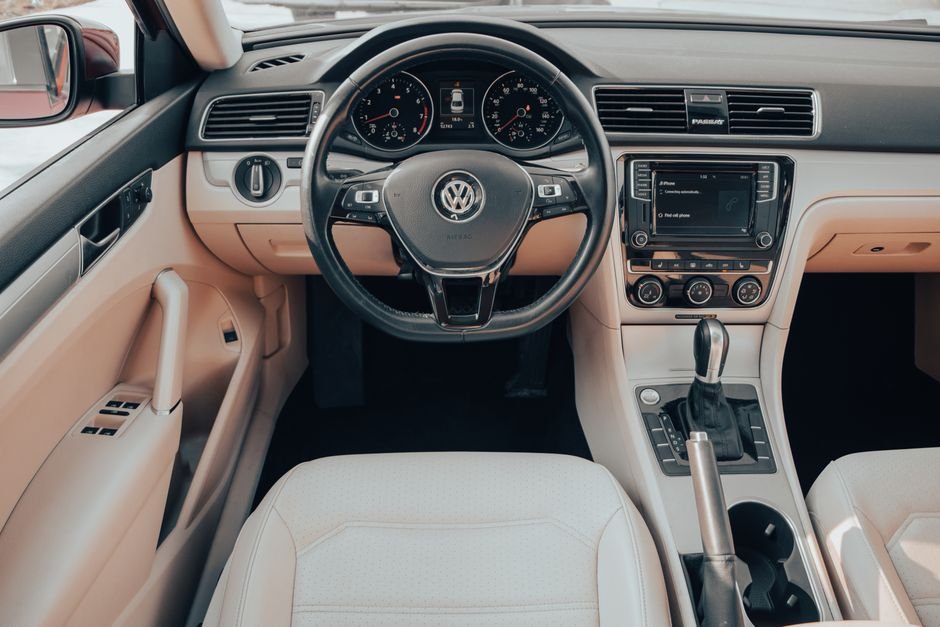
Inside, those blue and red instruments weren’t just for show. Blue calmed the brain, red highlighted activity. A battle-ready cockpit. Even on the interstate. And the soft-touch plastics? Felt like velvet. Unheard of in its class.
Underneath it All: A Secret Audi
Ever wonder why a Volkswagen Passat B5 drove so differently from a Golf? Simple: it wasn’t really a Volkswagen underneath. Standard VWs had engines crammed in sideways. But Piëch built the Passat B5 directly on Audi’s PL45 platform, with the engine running lengthways. Just like BMWs and Mercedes. Essentially, you were getting a stretched Audi A4 with a different badge.
This platform meant a fancy four-link independent front suspension. Zero torque steer. Even with 200 horses. Road holding and comfort? Miles ahead. The downside? These delicate aluminum arms, bushings, and ball joints weren’t tough enough for crap roads. Owners were always replacing suspension parts. Constant clunking noises.
And if you ever grabbed a Passat B5 with “4Motion” on the back? You pulled off one of car history’s best scams. See, a Haldex system (used in other VW 4WDs) wouldn’t fit that lengthwise engine setup. So engineers were forced to use Audi’s legendary mechanical, full-time Quattro center differential. Yes, a 4Motion Passat was a true, honest-to-god Audi Quattro for snow and mud. Wild.
Oops. Sticky Interior
That velvety soft-touch interior? A nightmare. Seriously. What looked great in European lab tests absolutely fell apart out here. Exposed to UV rays and human skin acids. Older cars saw the coating peel. Ugly white plastic. Often degrading to a gruesome, sticky goo. Touching a door handle and finding your hand stained black was a total rite of passage for B5 owners. That multi-billion-dollar push for “premium feel” ended up making the inside look totally trashed after just a few years.
The Water Fails: Comfort Control Module Drowning
This one is wild. Imagine locking your car, then waking up, and all the windows are down, sunroof open, alarm blaring, and interior lights flashing like a disco. No, not ghosts. Just simple plumbing failure. These tiny rubber drains under the wipers and near the battery, meant to clear rainwater, would clog up. Leaves, dust, mud. Clogged easily.
During heavy rain, this entire spot would become a pond. Water flooded the cabin via the pollen filter opening. The ultimate irony? Volkswagen engineers, in a moment of utter blindness, placed the critical Comfort Control Module (CCM), which controls windows, locks, and alarms, right under the driver’s seat. Water, following gravity, pooled directly into it. Shorting out the brain. Regularly check and clear your cowl drains to prevent total electrical meltdowns, folks.
That Fancy Front Suspension? Flimsy
And yeah, that high-tech Audi suspension gave superb handling. But it was notoriously fragile in normal driving. Those delicate aluminum control arms, bushings, and ball joints wore out fast, leading to constant clunking from the front end. It was the price paid for superior road holding. A real pain.
Engine Woes: Sludge and Ticking Bombs
The Volkswagen Passat B5 had a bunch of engines. Not all were amazing.
- 1.8T (20V – 5 valves per cylinder): Piëch brought Ferrari-style tech to this sedan. A high-revving, super modifiable turbo engine. You could easily tune it past 200 hp. The problem? A tiny oil sump. The engine was originally for a transverse setup (like the Golf) with a bigger oil pan. When crammed lengthways into the Passat, the oil pan shrunk to fit the chassis. Less than four liters of oil in a high-revving, turbocharged, five-valve engine meant disaster. Overheating oil turned into a black sludge. Clogging the oil pump pickup. Catastrophic engine total failures. Volkswagen initially blamed owners. But class-action lawsuits forced them to extend warranties. Recommend bigger diesel-sized oil filters. And mandate full synthetic oil with shorter change intervals to limit the issue.
- 2.5 V6 TDI: This engine, especially with 4Motion, was a proper boss car. But it had a ticking time bomb: crappy lubrication design and material choices led to camshaft wear. The engine would start sounding like a tractor. Plus, problematic VP44 fuel pumps often made it worse. Repairs were crazy expensive. Enough to make mechanics run for the hills.
Door Lock Woes: Keys Locked In
And then there were the door lock microswitches. A real head-scratcher. Older cars had a simple button on the door jamb that signaled an open door. VW, wanting sleek aesthetics, hid these tiny sensors deep within the door lock mechanism. Over time, from repeated door slams or just plain fatigue, they’d fail. The car wouldn’t register the door opening. You’d unlock the driver’s door, chuck keys on the seat, close the door to grab your jacket, and – click. The car, thinking the door was never opened, automatically relocked itself in seconds. Keys inside. You outside, sweating bullets. Undetected open doors also caused interior lights to stay off, fuel pumps not to arm, and random alarms freaking out. Fixing it meant taking apart the whole door. Panel, window, steel inner panel. Just for a tiny, cheap part. This wasn’t fixed for a whopping seven years. Unreal.
The Rare Passat W8: Bugatti’s Sneaky Lab
Finally, the peak of Piëch’s ambition, where common sense flew out the window: the Passat W8. By the early 2000s, Piëch was bored. He also owned Bugatti and was designing the Veyron’s crazy 16-cylinder engine. “Test the new W-engine architecture,” he commanded. “Put a prototype under the Passat’s hood.” Impossible, right? A V8 wouldn’t fit. But engineers came up with a smart idea: two narrow-angle V4s joined on a single crankshaft. A compact W8 that somehow squeezed into the Passat‘s engine bay.
This 4.0L, 270 hp Passat W8 looked just like any other 1.6 Passat from the outside. Save for its quad exhausts. It was the ultimate sleeper: a business suit hiding supercar genes. With mechanical Torsen AWD and even a 6-speed manual option. Pure stealth speed. But it was a service technician’s nightmare. The engine was jammed in so tight. Changing a sensor or thermostat? Meant removing the entire front clip – bumper, radiators, everything. Service costs typically exceeded the car’s actual value. Sales were terrible. Still, Piëch got what he wanted: the Passat W8 became a rolling, paid laboratory. The data collected helped double the cylinder count and add four turbos. Evolving directly into the Bugatti Veyron’s legendary W16 engine.
So, yes, the heart of today’s multi-million dollar Bugatti Veyron was actually tested under the hood of a 2001 Volkswagen Passat. Talk about an automotive legacy.
The Volkswagen Passat B5 wasn’t merely a car. It was Piëch’s declaration. A testament to engineering obsession. A car that said VW could be as complicated, as ambitious, as any luxury brand out there. Sure, the peeling plastics were annoying. The flooding electronics infuriating. And the fragile suspension and finicky diesels a drain on the wallet. But closing that heavy door, seeing those blue and red gauges light up, and feeling the solid, composed ride? Nothing else in its price range, or even above, delivered that feeling of quiet luxury. The B5 was the crucial step. It took Volkswagen from just a cheap car maker to a brand capable of Phaetons, Touaregs, and even Bentley and Bugatti. Wow. Keep those cowl drains clear, folks.
Frequently Asked Questions
Was the Volkswagen Passat B5 a luxury car? Really?
Ferdinand Piëch totally wanted the Volkswagen Passat B5 to seem fancy. Competing right against the Mercedes C-Class and BMW 3-Series. It had luxury aims. Smart engineering. And genuinely high-quality finishes, stuff pretty much unheard of for Volkswagen back then. Felt super premium for its day.
What connection does the Passat B5 have to Bugatti?
That rare Passat W8, with its unique W-engine architecture, was a real-world testing ground for the bigger W16 engine. The one that eventually powered the Bugatti Veyron. Data and learnings from the W8’s development went right into the Veyron’s legendary motor.
What were some of the biggest problems with the Passat B5?
Well, a bunch of stuff. Like sticky, peeling soft-touch interior plastics. Comfort control module failures caused by clogged cowl drains leading to cabin floods. The flimsy multi-link front suspension on rough roads. “Oil sludge” issues in the 1.8T engine. Camshaft wear on the 2.5 V6 TDI. And those infuriating door lock microswitch failures.